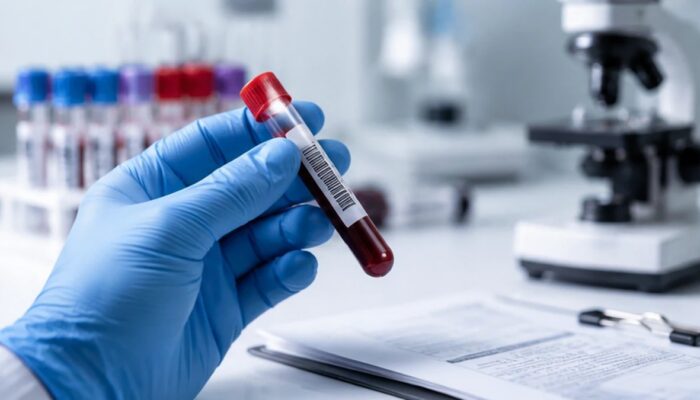
A blood test can be some of the most important evidence in a Pennsylvania DUI case, but a laboratory result is not automatically beyond challenge. Depending on the facts, a defense attorney may examine whether police had lawful authority to obtain the blood, whether any consent was valid, whether the sample was properly collected and preserved, whether the chain of custody is reliable, whether the laboratory followed required procedures, and whether the reported alcohol or drug concentration actually proves the charged offense.
Pennsylvania law also changed in an important way in 2025. In Commonwealth v. Hunte, the Pennsylvania Supreme Court held that 75 Pa.C.S. § 3755—the statute that purported to require certain emergency-room blood draws after motor vehicle accidents—was facially unconstitutional because it authorized warrantless blood searches without a valid categorical exception to the warrant requirement. That development makes the source and legal authority for a blood sample particularly important in current DUI cases.
Can a DUI Blood Test Be Challenged in Pennsylvania?
Yes. A DUI blood result may be challenged on legal, scientific or evidentiary grounds. The strongest issue depends on how police obtained the sample and what happened to it afterward.
A defense review may ask several separate questions: Was there a valid search warrant? Did the driver voluntarily consent? Was another recognized warrant exception actually present? Who drew the blood? Was the sample sealed, stored and transferred correctly? Did an approved laboratory use appropriate procedures and equipment? Does the laboratory documentation support the number reported by the prosecution?
A problem at one of these stages does not automatically mean a DUI charge will be dismissed. Some issues may support a motion to suppress evidence, while others go to the weight or reliability of the test at trial. The distinction matters, which is why the entire testing process—not just the final BAC or toxicology number—should be reviewed.
Did Police Need a Warrant to Draw Your Blood?
A blood draw is a search for constitutional purposes. Whether police lawfully obtained a DUI blood sample therefore depends on the circumstances surrounding the draw.
Pennsylvania’s implied-consent law, 75 Pa.C.S. § 1547, addresses chemical testing and the consequences of refusing testing. But implied consent does not give police unlimited authority to conduct a warrantless blood draw. Pennsylvania appellate decisions applying constitutional search-and-seizure principles have made the warrant, actual consent and any claimed exception to the warrant requirement central issues in blood-test cases.
The Pennsylvania Supreme Court’s June 17, 2025 decision in Commonwealth v. Hunte is especially significant. The Court held § 3755 facially unconstitutional, rejecting the idea that the statute itself could categorically authorize a warrantless hospital blood draw. As the current statutory notes now recognize, § 3755 was declared unconstitutional in Hunte.
That does not mean every Pennsylvania DUI blood draw now requires suppression. Police may obtain a warrant, and recognized exceptions to the warrant requirement can apply in appropriate circumstances. But a defense attorney should identify precisely what authority the Commonwealth relies upon for the blood search rather than assuming the draw was lawful merely because a DUI investigation was underway.
Was Consent to the Blood Draw Actually Voluntary?
Consent can be another important issue. Courts examine the circumstances surrounding alleged consent rather than treating the act of driving as blanket permission for every blood search.
The details matter: what the officer requested, what warnings were given, whether the driver was conscious and capable of making a decision, what the driver actually said or did, and whether the surrounding circumstances affected the voluntariness of the consent.
A defense attorney can compare police reports, body-camera footage, hospital records and chemical-testing paperwork to determine whether the Commonwealth’s description of consent is supported by the evidence.
Was the Blood Draw and Laboratory Testing Performed Properly?
Even a lawfully obtained sample still has to produce reliable evidence. Section 1547 provides that blood chemical tests conducted by a Pennsylvania facility are to be performed by a clinical laboratory licensed and approved by the Department of Health for that purpose, using prescribed procedures and equipment, or by a Pennsylvania State Police criminal laboratory.
A careful review can include the qualifications of the person who drew or tested the blood, the collection kit, labeling and seals, preservatives or anticoagulants where relevant, storage conditions, laboratory instruments, quality-control records, calibration or maintenance information, testing methodology and the underlying analytical data.
This is particularly important in drug-DUI cases. A toxicology report may identify one or more substances or metabolites, but the legal and scientific significance can differ substantially from a straightforward alcohol BAC result. Kellis’s existing guide to what drugs are tested for in a DUI blood test provides additional background on Pennsylvania drug testing.
Can Chain-of-Custody Problems Affect a DUI Blood Test?
Blood evidence passes through multiple hands. A sample may be collected at a hospital or other facility, sealed in a kit, transferred to law enforcement, transported or shipped, received by a laboratory, stored, opened and eventually analyzed.
The Commonwealth generally needs evidence connecting the tested specimen to the defendant and showing that the sample remained sufficiently reliable throughout that process. A defense investigation may compare collection records, seals, dates, evidence logs, submission forms, laboratory receiving records and analyst notes.
Not every minor paperwork discrepancy makes evidence inadmissible. But unexplained gaps, inconsistent identifiers, damaged seals, questionable storage or conflicts between records can create legitimate issues concerning authenticity and reliability.
Can a Blood Sample Be Retested by an Independent Laboratory?
In an appropriate case, independent review or retesting can be valuable. Section 1547 states that chemical-test results must be made available to the person tested or the person’s attorney upon request. It also recognizes a person’s ability to obtain an additional chemical test from a physician of their choosing.
Depending on what material remains available and the procedural posture of the case, counsel may seek underlying laboratory data or explore independent analysis. The goal is not simply to generate a second number. An expert may also evaluate methodology, measurement uncertainty, specimen integrity and whether the reported result is scientifically supported.
Kellis Law Firm specifically reviews blood-test evidence as part of DUI defense and has experience with independent blood-sample analysis. When a reported concentration places a driver near a statutory BAC threshold, careful scientific review can be particularly important because Pennsylvania uses different DUI tiers based in part on BAC.
Does the Two-Hour Rule Matter in a Pennsylvania DUI Blood Test?
Timing can matter in alcohol-related DUI prosecutions. Pennsylvania’s DUI statute generally defines certain alcohol offenses using a BAC measured within two hours after the person drove, operated or was in actual physical control of a vehicle.
The statute also contains an exception allowing evidence from a sample obtained more than two hours later if the Commonwealth establishes good cause for the delay and establishes that the person did not consume alcohol or use a controlled substance between arrest and collection.
A defense attorney should therefore establish a reliable timeline: alleged driving time, traffic stop or accident time, arrest, transport, warrant application if applicable, and actual blood collection. A result should not be evaluated in isolation from when the sample was obtained.
What If Your BAC Was Below .08?
A blood result below .08 does not necessarily end a Pennsylvania DUI prosecution. Pennsylvania permits a general-impairment prosecution based on evidence that a person was incapable of safely driving because of alcohol, even when the Commonwealth does not prove a BAC of .08 or higher.
That means the defense may need to address both the chemical evidence and the officer’s observations, driving evidence, field sobriety testing, video and other circumstances. Our guide on whether you can be charged with DUI under .08 explains this distinction in more detail.
Likewise, a BAC result should be interpreted in the context of Pennsylvania’s tiered DUI law. Drivers reviewing a laboratory result can also consult our explanation of how to read a DUI BAC chart for general background on the statutory ranges.
What Evidence Should a DUI Lawyer Obtain to Review a Blood Test?
A meaningful blood-test challenge often requires more than the one-page laboratory result. Depending on the case, useful evidence may include the search warrant and affidavit of probable cause; consent or implied-consent documentation; body-camera and dash-camera video; blood-draw records; evidence and chain-of-custody logs; laboratory submission and accession records; analyst notes; chromatograms or other raw instrument data; quality-control information; instrument maintenance records; toxicology reports; hospital records; and testimony from the collector or analyst.
The objective is to reconstruct what happened from the decision to seek blood through the final reported result. That allows the defense to separate constitutional issues from collection problems, laboratory issues and questions about what the result actually proves.
Talk With a Pennsylvania DUI Lawyer About Your Blood Test
A blood result can significantly affect the charges and potential penalties in a Pennsylvania DUI case, particularly when the reported BAC falls into a higher statutory tier or when controlled substances are alleged. But the prosecution still has to establish that the evidence was lawfully obtained, admissible and sufficiently reliable to prove the offense.
Steven E. Kellis is a former DUI prosecutor whose practice focuses on Pennsylvania DUI defense. If your case involves a blood draw, laboratory BAC result or toxicology report, a detailed review of the warrant, collection process, chain of custody and laboratory evidence may identify issues that are not apparent from the final report alone. Contact a Pennsylvania DUI lawyer at Kellis Law Firm to discuss the evidence and the defenses that may apply to your case.