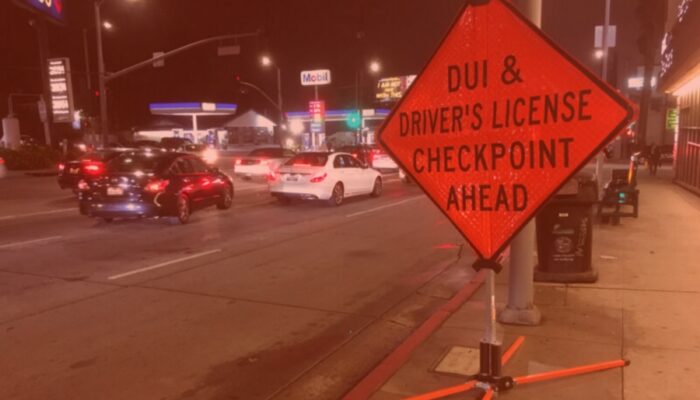
Here’s the quick reality check: DUI checkpoints can be legal in Pennsylvania, but only when police follow strict rules. This isn’t “random stops because they feel like it.” It’s supposed to be a structured, pre-planned systematic program with safeguards designed to keep the stop brief and prevent arbitrary targeting.
In Philadelphia, people tend to run into checkpoints in the same kinds of situations: late-night driving corridors, big event weekends, and major arteries where traffic naturally funnels—think routes like I-95, Roosevelt Boulevard, and areas feeding into the Schuylkill. Not “they’ll be here tonight,” just the reality of where enforcement shows up when the city’s moving.
If you were stopped or arrested at a checkpoint, talk to a Philadelphia DUI lawyer like Steven Kellis to review whether the roadblock followed PA checkpoint rules.
What counts as a DUI checkpoint in Pennsylvania
A DUI checkpoint is basically a suspicionless stop done at a fixed location where police briefly stop drivers according to a predetermined plan. That’s the key difference from a normal traffic stop.
In a typical DUI stop, an officer needs a reason to pull you over—speeding, swerving, a broken tail light, something that creates reasonable suspicion. At a checkpoint, the stop happens because you drove through that location, not because they saw you do anything wrong.
Pennsylvania treats checkpoints as a narrow exception because the courts weigh two things against each other: public safety (catching impaired drivers before someone gets hurt) versus the fact that stopping people without individualized suspicion is a big deal. That “balance” is why the rules matter so much.
The legal authority behind checkpoints (PA + federal)
The PA “systematic program” requirement
Pennsylvania allows checkpoint stops only when they’re part of a systematic program—meaning there’s a real plan behind it. Officers aren’t supposed to freestyle who gets stopped or how long it takes. The point is to avoid stops that turn into “whatever the officer feels like doing,” because that’s where unfairness and constitutional problems show up fast.
In plain English: if it’s not organized, neutral, and consistent, it’s not what PA law is talking about.
The Supreme Court checkpoint baseline
At the federal level, sobriety checkpoints have been upheld because the courts view them as a minimal intrusion when done correctly—brief stop, limited questions, visible police presence—against the public safety benefit of reducing drunk driving crashes.
That doesn’t mean “anything goes.” It means checkpoints are allowed only within a tight framework—and Pennsylvania stacks additional requirements on top of that.
The Tarbert/Blouse checklist that makes (or breaks) a checkpoint
This is the “was this checkpoint even legal?” section—and it’s where real defenses often start. A checkpoint isn’t automatically valid just because police called it a checkpoint. Pennsylvania courts look for specific safeguards.
Brief stops + no searches without more cause
A checkpoint stop is supposed to be quick. Think: a short interaction, a quick look for obvious signs of impairment, and you’re on your way.
Police generally can’t treat the checkpoint like an automatic search zone. If they want to search the car or take things further, they need an additional lawful basis (like probable cause, consent, or something that develops during the interaction).
Advance notice + visible setup
A legitimate checkpoint shouldn’t feel like a trap. There should be clear signage, lighting, and a visible police presence so drivers know what’s happening.
Advance public notice is part of the transparency idea: checkpoints are meant to deter impaired driving, not ambush random people with unclear procedures.
Admin approval
One of the biggest themes in PA checkpoint law is this: the decision isn’t supposed to come from whoever is working that night on the street.
A compliant checkpoint is generally approved by police leadership/administration, with a plan in place, instead of being improvised on-scene.
Data-driven location + timing
“Why here, why now?” matters.
The location and timing should be connected to real enforcement goals—often based on local experience or incident history—not arbitrary placement. This requirement is meant to prevent checkpoints from being set up just because it’s convenient, or worse, because it targets certain drivers or neighborhoods unfairly.
Neutral stopping pattern
The stop pattern should be objective and consistent, like:
- every car
- every third car
- every fifth car
What’s not okay in spirit: picking cars based on vibes, vehicles, or who the officer wants to talk to. The whole point is removing discretion so the checkpoint doesn’t become selective enforcement.
What actually happens at a Philadelphia checkpoint
The “first contact” script
Most checkpoint interactions start the same way:
- You roll down your window
- You’re asked for driver’s license, registration, and proof of insurance
- The officer may ask a quick question or two while observing you
If nothing seems off, they typically keep it moving. Checkpoints are designed for volume—police don’t want a 10-minute conversation with every driver unless something triggers escalation.
Questions you don’t have to help them answer
Keep it simple. You provide the required documents. Beyond that, you don’t have to make their case for them.
You’re not obligated to give a detailed recap of your night, where you were, what you drank, who you were with, or anything else that turns a brief stop into a self-incriminating story. Minimal, polite, and calm is the move.
When it escalates
Escalation usually happens when the officer claims they notice signs that suggest impairment, like:
- odor of alcohol or marijuana
- slurred or unusual speech
- glassy or bloodshot eyes
- fumbling documents
- confusion about basic questions
- visible open containers
- coordination issues
At that point, the stop can shift from checkpoint screening into a DUI investigation. That’s where you may see requests for field sobriety tests or other steps that go beyond the “brief stop” idea—and where the legality and procedure of the checkpoint (and the officer’s conduct) start to matter a lot more.
Your rights at the checkpoint vs after an arrest (huge misconception)
People mix these up constantly: what you can refuse at the roadside is not the same as what you can refuse after an arrest.
Field sobriety tests (FSTs) and preliminary breath tests (PBTs)
At a checkpoint, an officer may ask you to do field sobriety tests or a roadside breath test (often called a PBT). Common FSTs include:
- Walk-and-turn (heel-to-toe line walk, turn, come back)
- One-leg stand (balance + count)
- HGN (Horizontal Gaze Nystagmus: tracking eye movement)
Here’s what matters: these are often used to build a probable cause decision—basically, the officer deciding whether they think they have enough to arrest you for DUI.
And yes, there’s a human factor. These tests can be affected by nerves, fatigue, injuries, footwear, weather, uneven pavement, and how the instructions were given. That doesn’t automatically “win” a case, but it’s why roadside testing isn’t the final word.
Chemical testing after arrest is a different world
Once you’re under arrest for DUI, Pennsylvania’s implied consent rules kick in. If police request chemical testing (breath/blood) and you refuse, the refusal can trigger license consequences—and officers are required to provide specific warnings tied to that refusal process.
This blog is checkpoint-focused, so the clean takeaway is: roadside requests and post-arrest chemical testing are not the same thing, and refusal after arrest can have automatic administrative fallout separate from the DUI charge itself.
Can you legally avoid a DUI checkpoint in Philadelphia?
Yes—if you do it legally.
If you see a checkpoint ahead and make a safe, legal turn (or take a legal alternate route), that’s generally allowed. What you can’t do is give police an easy reason to stop you by:
- making an illegal U-turn
- crossing lines or cutting lanes unsafely
- rolling stop signs, ignoring signals, speeding off, etc.
Big point: avoiding a checkpoint isn’t automatically “probable cause.” But committing a traffic violation while avoiding it absolutely opens the door for a stop and a standard DUI investigation.
How DUI checkpoint cases get challenged in court
This is where the checkpoint rules become more than trivia. If the checkpoint wasn’t run the way Pennsylvania requires, your lawyer may be able to attack what came from the stop.
The suppression angle
Pennsylvania checkpoint law is procedure-heavy for a reason. If the checkpoint failed the Tarbert/Blouse requirements—things like how it was planned, how it was announced, how cars were selected, how long it took—your attorney may challenge whether key evidence should be allowed in court. That’s the basic “suppression” concept.
No promises, because outcomes depend on facts and judges. But conceptually, checkpoint compliance can be a make-or-break issue.
What evidence a defense lawyer looks for
A strong checkpoint review usually starts with the paper trail and the process:
- proof of advance notice (where/how it was announced)
- the operational plan (who approved it, what the plan said)
- the stop pattern (every car, every 3rd car, etc.)
- supervisor/administrative approval documentation
- whether the stop was actually brief or turned into a mini-investigation
- checkpoint signage/lighting/layout (visibility, safety, clarity)
- officer reports/body cam (what they claim they observed, timelines)
Philly-real examples that raise eyebrows:
- “Everyone was waved through except certain cars.”
- “No clear signage until you were already trapped in line.”
- “The stop took forever and felt like an investigation from the start.”
Philadelphia-specific context that matters
You don’t need to keyword-stuff Philly to make this useful. You just want it to feel real.
In Center City, South Philly, Northeast Philly, and University City, the driving reality is different—different traffic flow, different late-night patterns, different event volumes. Checkpoint encounters tend to happen when roads funnel drivers in predictable ways (bridges, arterials, post-event exits).
And because Philly is a hub, a lot of checkpoint-related DUI cases involve people driving in from nearby areas like Upper Darby, Cheltenham, Bala Cynwyd, and even across the river from Camden—not because of anything shady, just because that’s how this metro works.
Frequently Asked Questions About Philadelphia DUI Checkpoints
Are DUI checkpoints legal in Philadelphia?
Yes—if they follow Pennsylvania’s checkpoint requirements (a “systematic program” and the Tarbert/Blouse safeguards). If the process wasn’t followed, that can matter.
Do I have to answer “Have you been drinking?”
You must provide your license, registration, and proof of insurance when asked. Beyond that, keep it polite and minimal. You’re not required to help build the case with extra details about your night.
Can I refuse field sobriety tests?
In many situations, yes—field sobriety tests are commonly requested to help an officer decide whether they think they have probable cause. Refusing doesn’t automatically mean you’ll be arrested, but it also doesn’t guarantee you’ll be waved through.
Can I refuse a roadside breath test?
Often, yes—many roadside breath tests are voluntary. But if the officer believes they have enough indicators, they may still move forward with an arrest and request official testing later.
What happens if I refuse chemical testing after arrest?
That’s the “different world” part. After an arrest, Pennsylvania implied consent rules apply, and refusing official chemical testing can trigger license consequences and involves required warnings.
Can I turn around to avoid a checkpoint?
Yes, as long as you do it legally and safely. Avoiding isn’t automatically probable cause—but a traffic violation (illegal U-turn, unsafe lane change, etc.) gives police a lawful reason to stop you.
Conclusion: Procedure matters more than people think
The main takeaway is simple: checkpoints are procedure-dependent. In Pennsylvania, the legality isn’t just “Was it a checkpoint?” It’s “Did they run it the way the law requires?” Small failures—notice, approval, stop pattern, delay—can matter a lot when your freedom, record, and license are on the line.
If you’re facing charges from a roadblock stop, speak with a Philadelphia DUI lawyer like Steven Kellis to evaluate whether the checkpoint followed Pennsylvania’s required rules.